An investment in energy infrastructure that positions the mill as a forward-looking industrial operation for domestic and export markets.
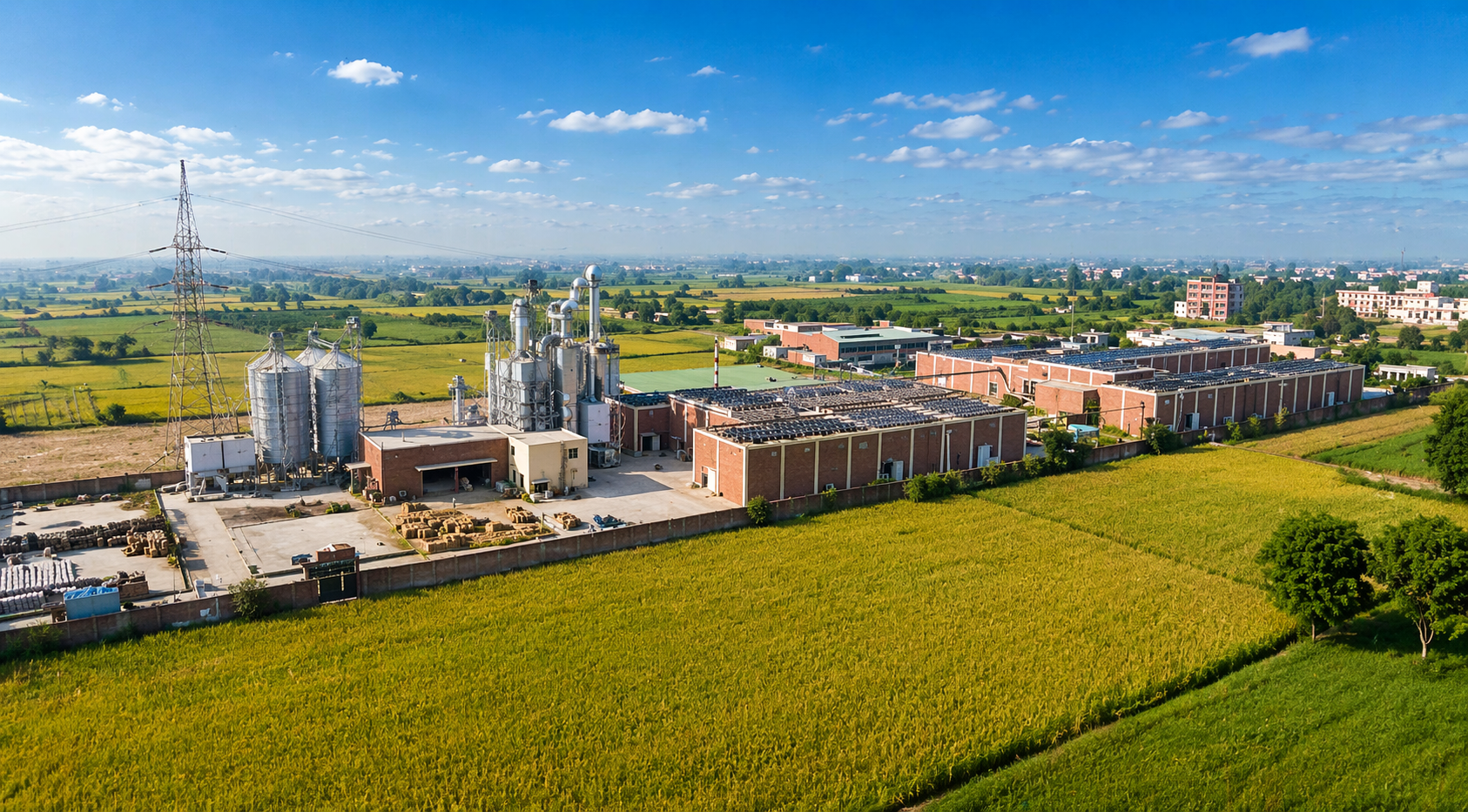
Sardar Rice Mills commissioned a 500 kW grid-tied solar power plant at its Ghakhar facility. The installation covers a significant portion of the mill's operational energy demand — from processing and sorting equipment to packing floor operations and facility lighting.
The decision was driven by practical considerations: energy reliability, long-term cost stability, and the increasingly important role that environmental accountability plays in export market positioning. A mill that generates its own clean energy is a more resilient mill — and for buyers who evaluate suppliers on sustainability criteria, it is also a more credible one.
The installation was documented through aerial drone footage, capturing the scale of the solar array across the factory roof.
Estimated based on standard solar yield calculations. Not audited plant data — actual generation depends on site conditions and operational hours.
Estimated figures for website presentation only. Not audited, certified, or validated environmental data.
Pakistan's industrial sector faces persistent grid instability and energy cost variability. A 500 kW solar plant provides a degree of operational independence — reducing exposure to grid outages and fuel price fluctuations.
By generating solar power during peak daylight hours, the mill significantly reduces its draw on conventional grid electricity — directly lowering the carbon intensity of the processing operation.
The scale of the installation — 500 kW — reflects a deliberate infrastructure investment commissioned with a long operational life in mind. It contributes to the overall modernization of the Sardar Rice Mills facility.
An increasing number of international buyers — particularly in Europe and the Middle East — include sustainability criteria in supplier evaluation. A demonstrable solar installation is a concrete, verifiable element of that conversation.
Within Pakistan's rice processing sector, this level of energy infrastructure investment is not universal. It positions Sardar Rice Mills as a company investing in infrastructure that will support operations and buyer relationships over the long term.
The company's agricultural roots — with direct field-level procurement oversight — complement the sustainability narrative. Responsible energy use at the processing stage reflects a broader pattern of considered operational management.